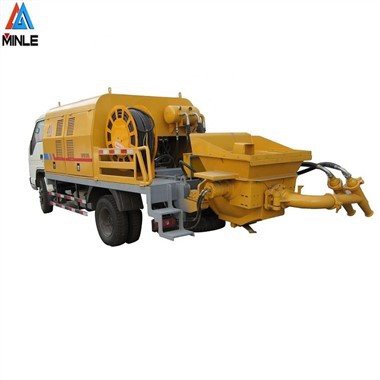
What is a Vehicle-mounted Concrete Pumps?
Mar 18, 2025

A vehicle-mounted concrete pump is a specialized construction machine used to transport and pump concrete efficiently at various job sites. Mounted on a truck or a trailer, it integrates a pumping system that enables the delivery of concrete through pipelines to precise locations. This equipment plays a crucial role in modern construction projects, offering high efficiency, reduced labor costs, and improved placement accuracy.
Structure and Components
A vehicle-mounted concrete pump consists of several key components:
The chassis is the foundation of the vehicle-mounted concrete pump. It provides mobility, stability, and a platform for the pump system. Commonly, heavy-duty trucks serve as the base, ensuring the machine can operate on diverse terrains and navigate construction sites effectively.
The pumping system is the core of the equipment, responsible for delivering concrete through a hydraulic mechanism. It includes:
Hopper: A container that receives and holds fresh concrete before pumping.
S-Valve or Rock Valve: Directs the concrete flow between the pumping cylinders and the pipeline.
Hydraulic Cylinders: Operate the S-valve and drive the pumping action.
Pipelines and Delivery Hoses: Carry the concrete to the desired location.
Some vehicle-mounted concrete pumps are equipped with a hydraulic boom that extends and maneuvers to place concrete at different heights and angles. These booms have multiple sections that provide flexibility in directing the concrete.
The control system includes manual and remote-control options, allowing operators to precisely manage the pumping process. Advanced models feature automated systems with real-time monitoring to optimize efficiency and safety.
Working Principle
The operation of a vehicle-mounted concrete pump follows these steps:
Concrete Loading
Fresh concrete is poured into the hopper from a mixer truck.
Pumping Mechanism
Hydraulic pressure drives the piston cylinders, pushing concrete through the pipeline.
Valve Switching
The S-valve alternates between cylinders, maintaining a continuous flow.
Concrete Placement
Concrete is delivered to the required location through the boom or hose system.
Types of Vehicle-mounted Concrete Pumps
Truck-mounted Concrete Pump
A truck-mounted concrete pump integrates the pump system with a truck chassis. It is highly mobile and suitable for large-scale construction projects, such as high-rise buildings, bridges, and infrastructure developments.
Truck-mounted Boom Pump
Equipped with an articulated boom, this type of pump allows for precise placement of concrete at elevated locations. It is commonly used for high-rise structures and large-scale foundations.
Truck-mounted Line Pump
This model uses flexible hoses to deliver concrete to hard-to-reach areas. It is ideal for smaller construction sites, tunnels, and renovation projects where space is limited.
Advantages of Vehicle-mounted Concrete Pumps
High Efficiency
Compared to traditional manual methods, vehicle-mounted pumps can transport large volumes of concrete quickly, reducing construction time.
01
Precision and Flexibility
The boom system or hoses allow for accurate placement of concrete, minimizing material waste and ensuring quality construction.
02
Reduced Labor Costs
Automation reduces the need for manual labor, improving productivity and minimizing human fatigue.
03
Improved Safety
Operators can control the pump remotely, reducing direct exposure to hazardous conditions on-site.
04
Versatility
These pumps are adaptable to various types of projects, from residential buildings to large-scale infrastructure developments.
05
High-rise Building Construction
The ability to pump concrete vertically makes these machines essential for skyscrapers and multi-story buildings.
Bridge and Tunnel Projects
Vehicle-mounted pumps efficiently deliver concrete to hard-to-reach areas in bridge decks and tunnel linings.
Road and Highway Construction
Pumps are used to lay concrete pavement and structural components in highway projects.
Large-scale Industrial Projects
Factories, power plants, and water treatment facilities often require concrete pumping for structural foundations and installations.

Key Considerations When Choosing a Vehicle-mounted Concrete Pump
Pumping Capacity
Measured in cubic meters per hour (m³/h), this determines the efficiency and suitability for different project sizes.
Boom Length (for Boom Pumps)
Longer booms offer greater reach, but project requirements should dictate the optimal length.
Engine Power and Fuel Efficiency
Higher engine power ensures better performance, while fuel efficiency affects operational costs.
Maintenance Requirements
Regular maintenance ensures longevity and consistent performance. Choosing a model with easily accessible parts simplifies servicing.
Mobility and Maneuverability
Project location and terrain influence the choice between large truck-mounted units or smaller, more maneuverable line pumps.
Conclusion
Vehicle-mounted concrete pumps are essential equipment in modern construction. Their mobility, efficiency, and precision make them an indispensable asset for high-rise buildings, roadways, tunnels, and other large-scale infrastructure projects.